The Sea Organ of Zadar
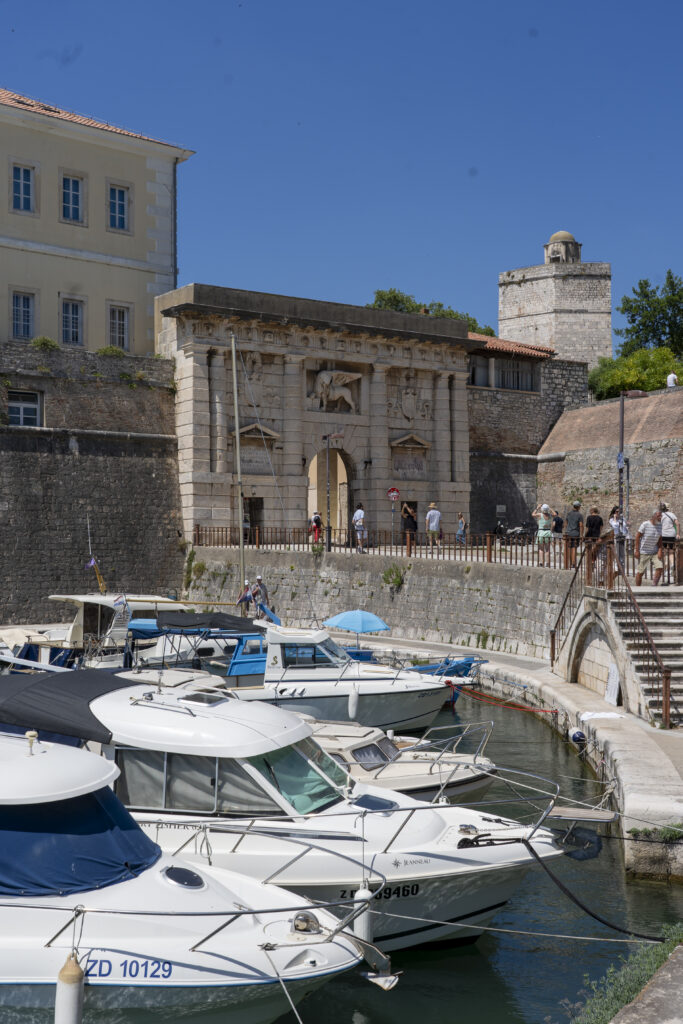
Day eight brought our first taste of the Dalmatian coast, and Zadar delivered immediately. After lunch at Fośa, we set out on a walking tour through a city layered in Roman ruins, forum stones, and centuries of history worn smooth by foot traffic.
But the moment that stopped everyone was the Sea Organ. Built into the marble steps of the waterfront promenade, it’s exactly what it sounds like: a massive pipe organ powered entirely by the sea. Architect Nikola Bašić designed 35 pipes beneath the steps so that as waves push in and pull out, air is forced through the chambers and released through openings above, producing soft, ever-changing harmonic tones. No two moments sound the same. You sit on the steps, feel the Adriatic breeze, and listen to the ocean play music. It might be the coolest thing on the entire coast.
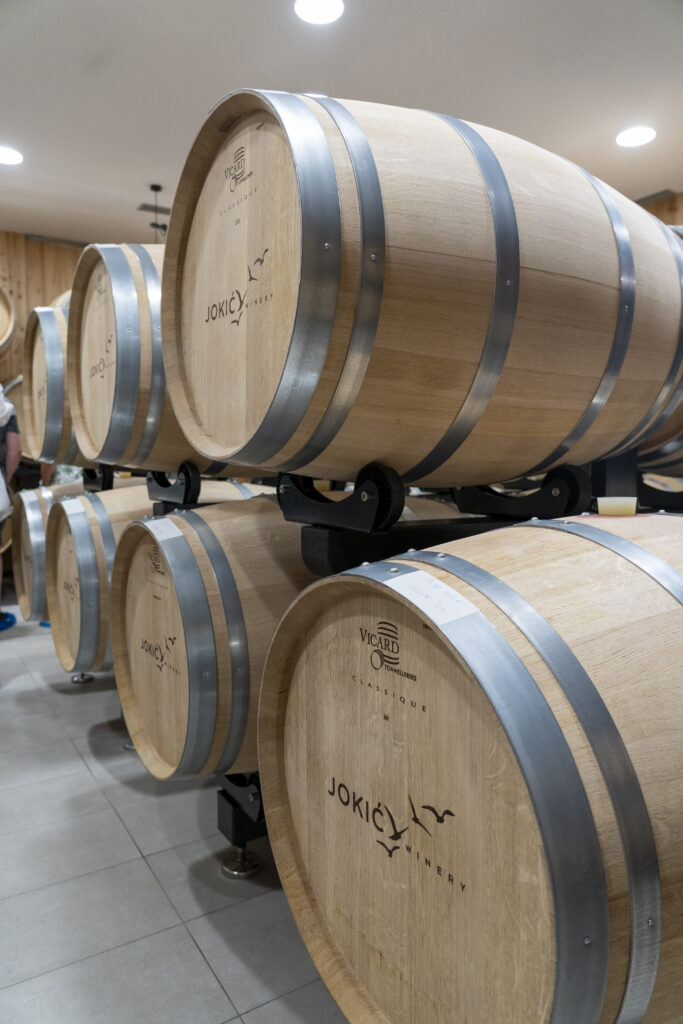
That evening we headed to Jokić Winery in the Ravni Kotari region just outside Zadar. The first pour was Maraština, an indigenous white grape native to the Zadar area and one of the oldest varieties in Dalmatia. The second was Pošip, aged in stainless steel with a clean, mineral finish. Dinner was a proper Dalmatian spread: lamb, potatoes, and cream pita paired with outstanding wines and a special treat — a tank sample of their 2023 Syrah that is shaping up beautifully.
Split and Diocletian’s Palace
Day nine took us south to Split for a walking tour starting on the Riva, the city’s beloved waterfront promenade, before heading straight into one of the most extraordinary sites in Europe: Diocletian’s Palace.
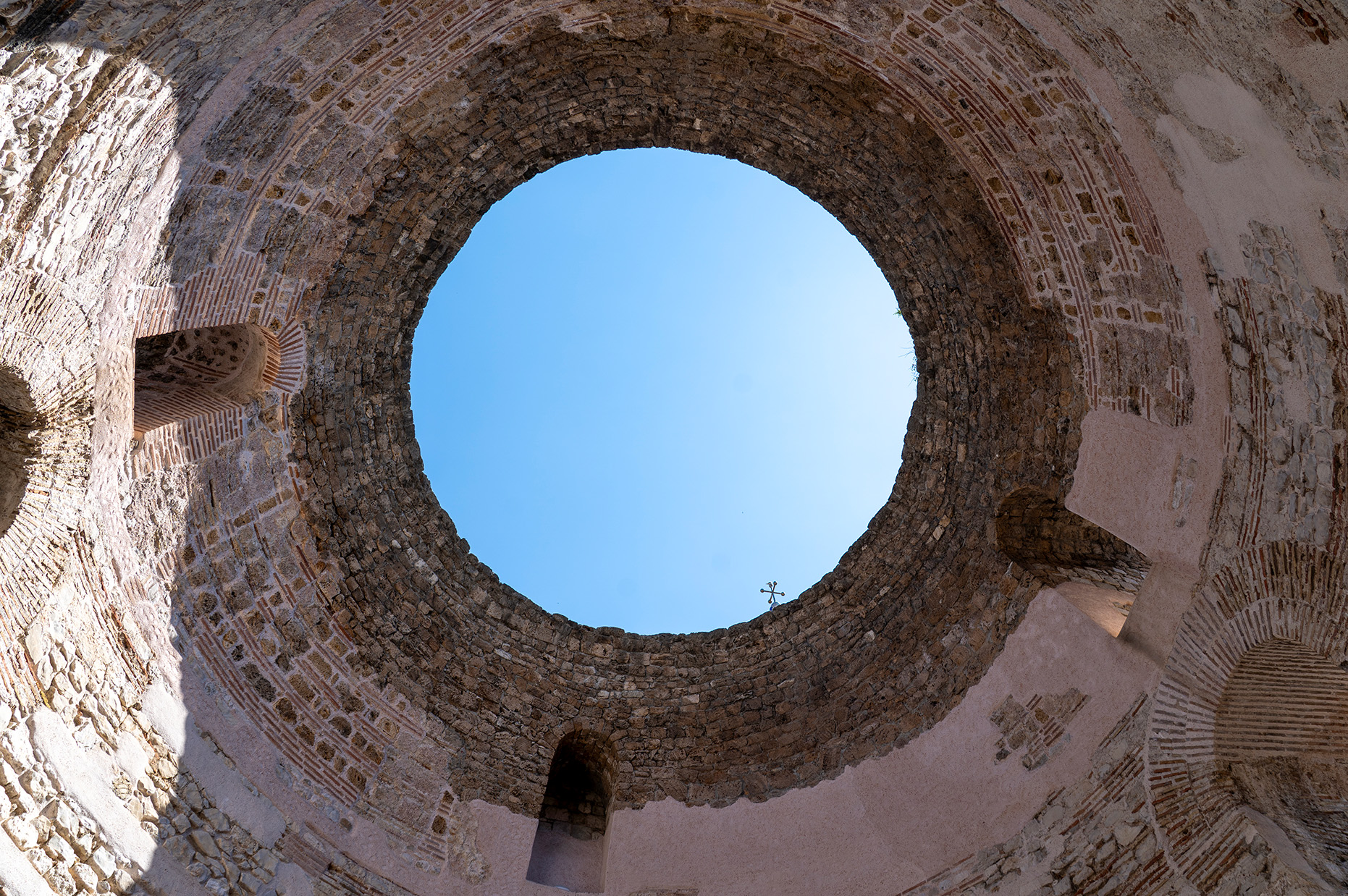
Built between 295 and 305 AD as Emperor Diocletian’s retirement residence (he was notably the only Roman emperor to voluntarily abdicate the throne), the palace is so vast it essentially became the city of Split. Today roughly 3,000 people still live within its ancient walls, alongside restaurants, boutiques, and bars tucked between Roman columns and Venetian facades. It has been a UNESCO World Heritage Site since 1979, and wandering its narrow stone streets, you understand completely why.
From there we visited Bibich Winery for tapas and wine pairings. Highlights included the Debit, a crisp indigenous white from the Dalmatian hinterland, and their Fumé Blanc, which rounded out a stellar afternoon. Dinner was at Epetium, where the group celebrated one of our travelers’ birthdays in proper style.
Day ten was a free day in Split. No agenda, no guide, just the city and however each person wanted to spend it
Pelješac and the Road to Dubrovnik
Day eleven wound us down the coast to the Pelješac Peninsula, one of Croatia’s most celebrated wine regions and home to Korta Katerina Winery.
The backstory makes this stop extra special. American couple Lee and Penny Anderson first came to Croatia in 2001 on a humanitarian mission following the war in Bosnia. They fell in love with the coast, the people, and the wine, and never really left. Their winery released its first vintage in 2006 and has been turning heads ever since.
The vineyards are planted with Plavac Mali, Babić, and Zinfandel, aged across French, American, and Hungarian oak. The connection between Plavac Mali and Zinfandel is one of wine’s great stories: genetic research confirmed the two grapes share the same Croatian ancestor, meaning the bold reds of Dalmatia and the Zinfandels of California are essentially cousins. The first pour of the day was the Plavac Mali Rosé, voted best rosé in Croatia, and it earned that title.
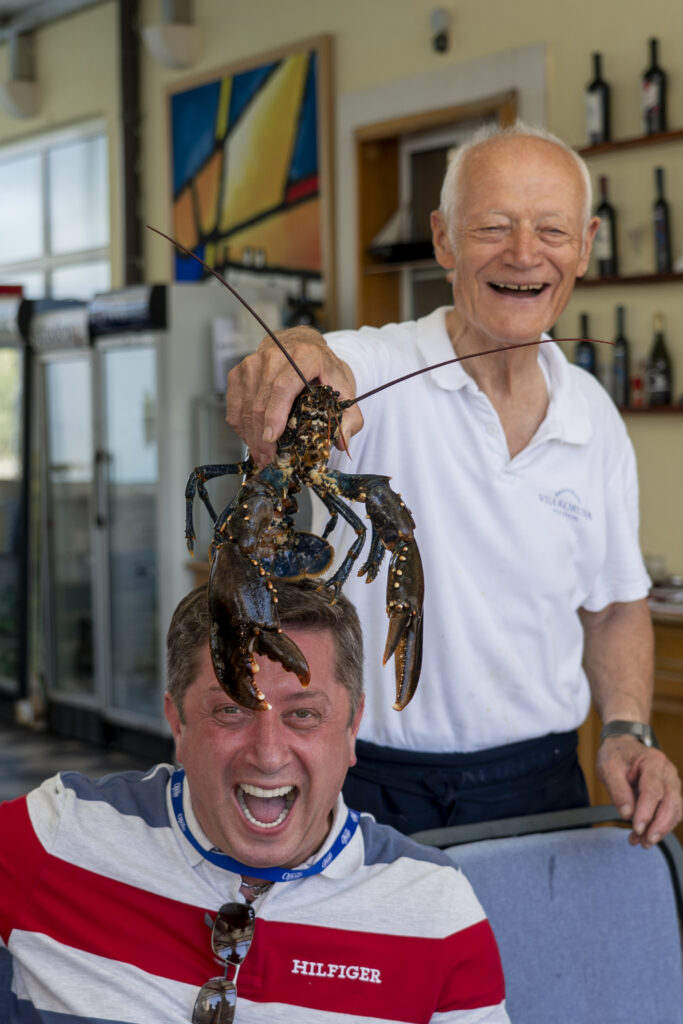
From the winery we made a quick stop in Ston, a medieval town famous for its walls, the longest in Europe outside of China, before settling into Mali Ston for lunch: fresh oysters, mussels, and branzino right on the water. It doesn’t get much better than that.
By evening we had arrived in Dubrovnik and checked in. Old Town awaits.