The Pearl of the Adriatic
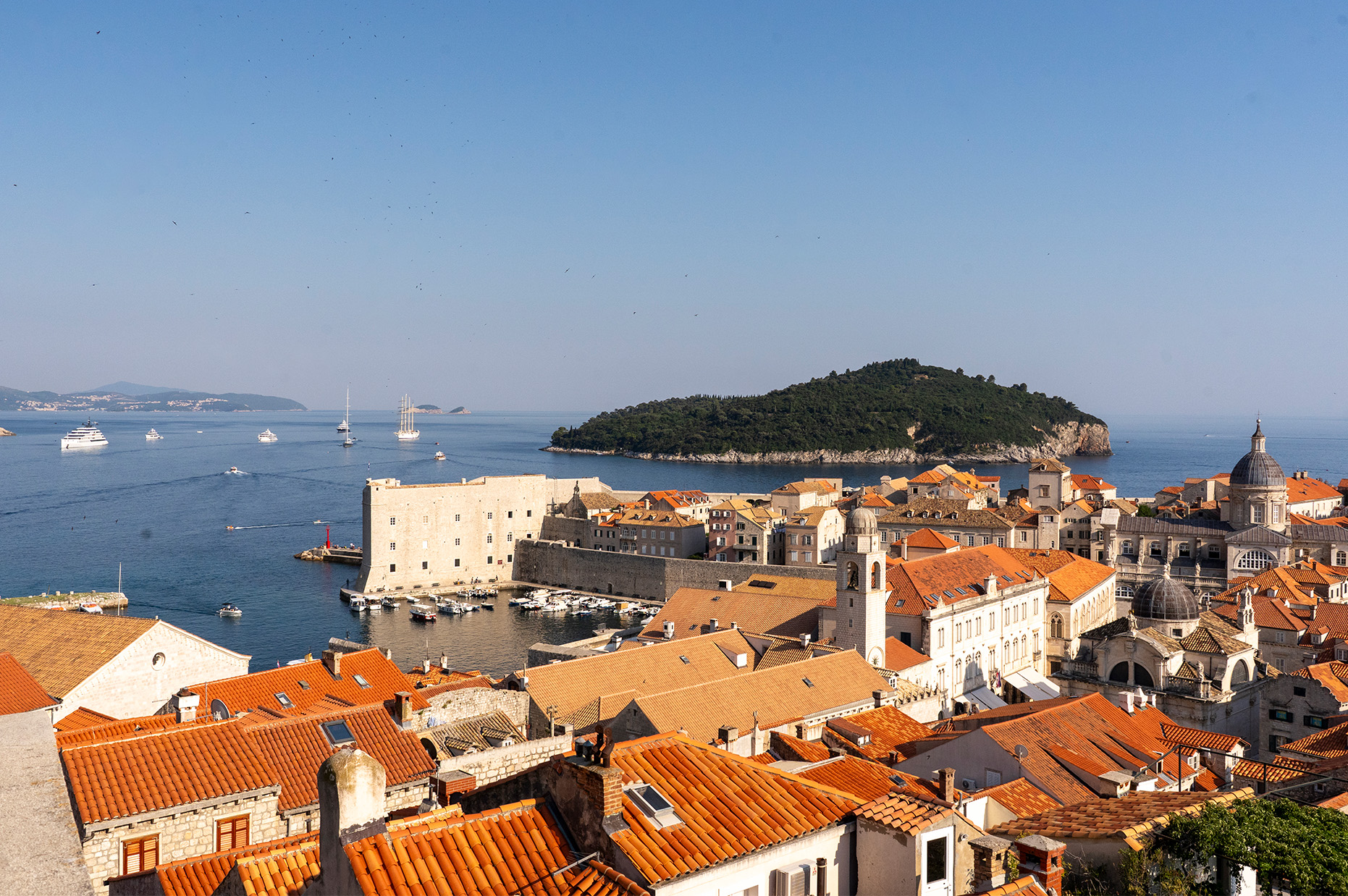
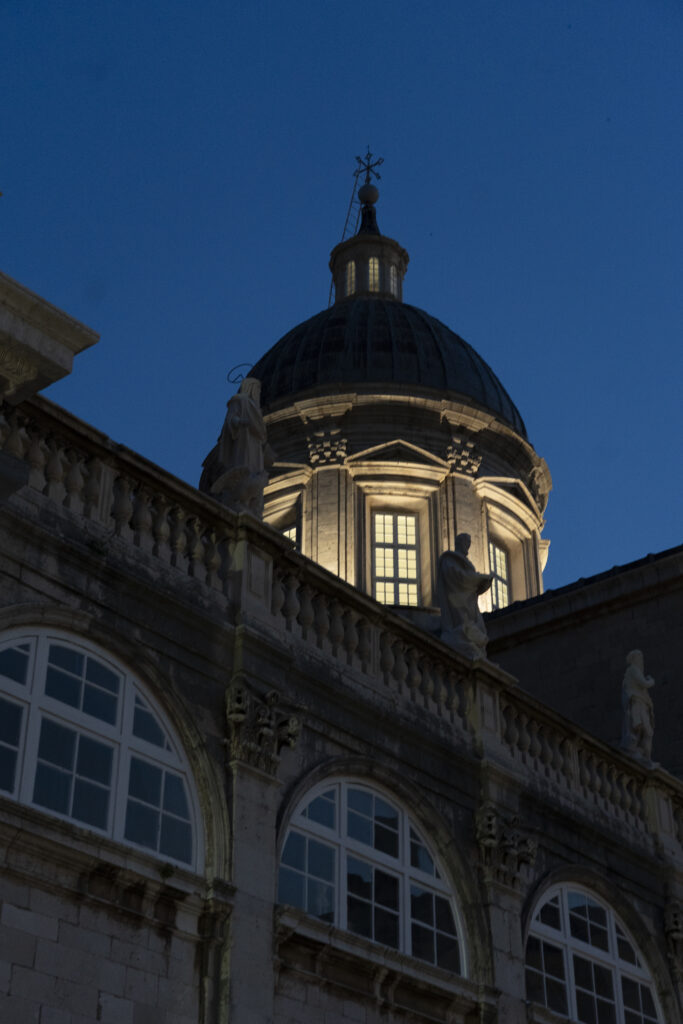
Dubrovnik needs no introduction, but it earns every superlative anyway. Day twelve started with a walking tour of Old Town, through limestone streets worn smooth by centuries of footsteps, past the Rector’s Palace and along the ancient city walls that have kept this city standing through wars, earthquakes, and sieges since the Middle Ages.
For fans of Game of Thrones, this is King’s Landing in the flesh. Dubrovnik served as the show’s iconic capital, and once you’re standing inside those walls, the choice makes complete sense.
We wandered down to the port, and some of the group made the climb up along the walls for a bird’s eye view of the terracotta rooftops spilling down to the Adriatic below. A boat tour took us out on the water for a different perspective entirely. As the sun dropped over the old city that evening and turned everything gold, we sat at a restaurant just off the coast and let the moment sink in. Some trips have a highlight. Dubrovnik was ours.
Three Countries, One Day
Day thirteen was one of the most unexpectedly moving days of the entire trip. We left Dubrovnik and crossed the border into Bosnia and Herzegovina for a day trip to Trebinje, a sun-drenched Mediterranean city set along the Trebišnjica River just 28 kilometers from the coast.
Our first stop was Podrumi Vukoje 1982, a family winery founded that year and now one of the most celebrated producers in Bosnia and Herzegovina. Everything here is estate grown, the vineyards are fully organic with sheep grazing between the rows to keep the land healthy and natural. The star of the tasting was Žilavka, Bosnia’s signature indigenous white grape, recently named one of the top 100 wines in the world by Decanter. It’s a wine that earns that recognition: crisp, mineral, and unlike anything else in this part of Europe.
From the winery we drove to Tvrdoš Monastery, a Serbian Orthodox monastery built in the late 15th century on the foundations of a 4th century church. The name Tvrdoš means “tough” in Serbian, a fitting name for a place that has been destroyed and rebuilt multiple times over the centuries, surviving Ottoman raids and Venetian wars alike. Beneath the monastery sits a stone wine cellar dating to the 15th century, where monks have been producing Vranac and Žilavka for generations. Standing in that cellar, surrounded by old oak barrels and centuries of history, is the kind of experience you don’t forget.
By evening we had crossed a third border into Montenegro, stopping in the ancient walled city of Kotor for dinner at Star Milini Restaurant. Three countries in one day. Not bad.
A Free Day on the Adriatic
Day fourteen was exactly what everyone needed. Budva, Montenegro’s coastal gem, asked nothing of us. Some wandered the charming old town, others claimed a spot by the pool or on the beach with a cold drink and nowhere to be. Dinner was in town, and just as the evening was winding down, the sky lit up with fireworks. Nobody had planned for it. Nobody needed to.
The Grand Finale: Plantaže and the Road Home
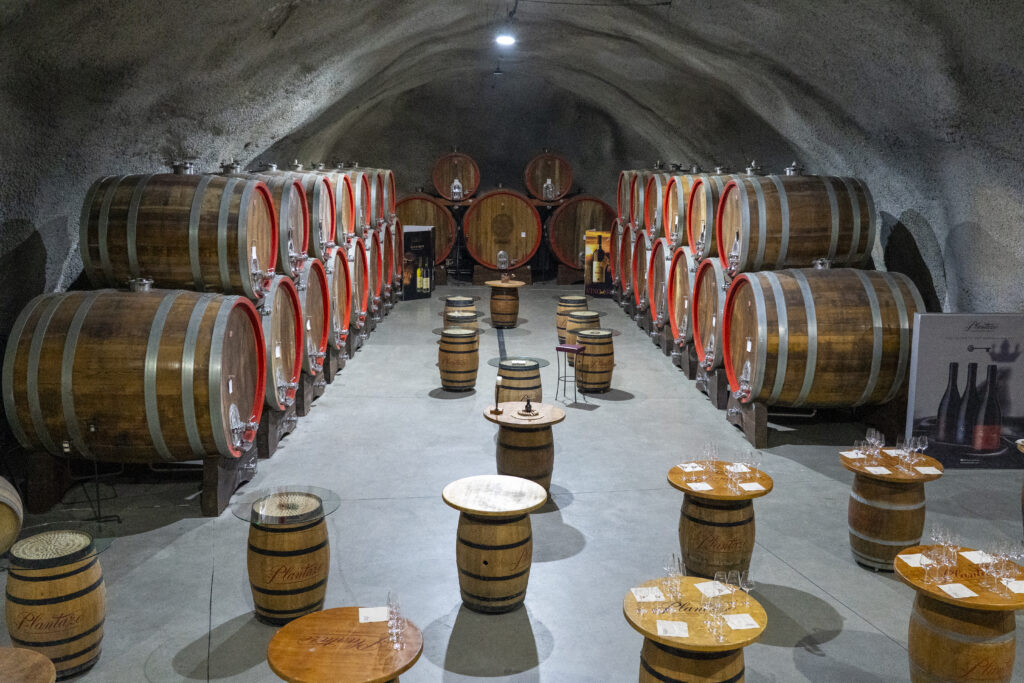
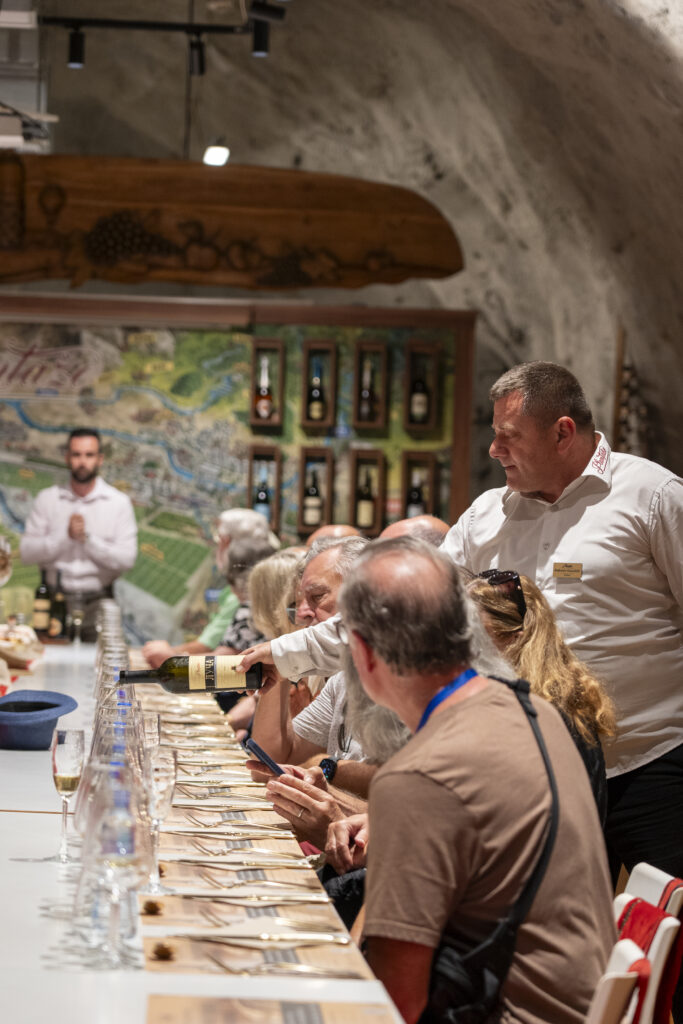
The final day of the Adriatic Tour 2026 saved one of its best stops for last. Outside Podgorica, we visited Plantaže, the largest single-plot vineyard in Europe. The numbers alone are staggering: 2,310 hectares of vines, over 11 million plants, 28 indigenous grape varieties, and a cellar built inside a former Yugoslav Air Force underground hanger that keeps wines at a constant, perfect temperature year-round.
Krstač, a white grape that grows exclusively in Montenegro and gets its name from the cross-shaped clusters of the vine, was our welcome pour. Elegant and mineral, it set the tone. Then came the Vladika, a Vranac and Cabernet blend with depth and structure. The finale was a dessert wine made from 100% Vranac, produced only in years when a late harvest is possible, aged four years in large oak barrels. The 2020 vintage we tasted was extraordinary — rich, complex, and worth every year it spent in that bunker.
Then it was back to where it all began. The farewell dinner was held at Hotel Moskva in Belgrade, the same room where Rick Quinn raised the first glass fifteen days earlier. The Opolo wines were poured. The stories came out. There were tears, and there should have been, because what we experienced over these fifteen days across Serbia, Croatia, Bosnia and Herzegovina, Slovenia, and Montenegro was something genuinely rare.
Since 2010, it has been one of our greatest honors to bring Opolo wine club members and fellow wine lovers on this journey, to share the places, the people, and the culture that gave Opolo its roots. This part of the world isn’t just a backdrop for a great trip. It’s the reason Opolo exists the way it does, and every year we get to share that with a new group of people, it means everything.
Until next time. Živeli.