Through the Vineyards of Slavonia
Leaving Belgrade felt a little bittersweet. Serbia had exceeded every expectation. But Croatia was waiting, and the drive to Zagreb had a stop worth leaving for.
Kutjevo, tucked into the hills of Slavonia, is one of those places wine lovers should know by name. Cistercian monks established a winery here as far back as 1232, and the region has been producing exceptional white wine ever since. The grape that defines it is Graševina, so deeply woven into Slavonian winemaking that most Croatians simply consider it their own.
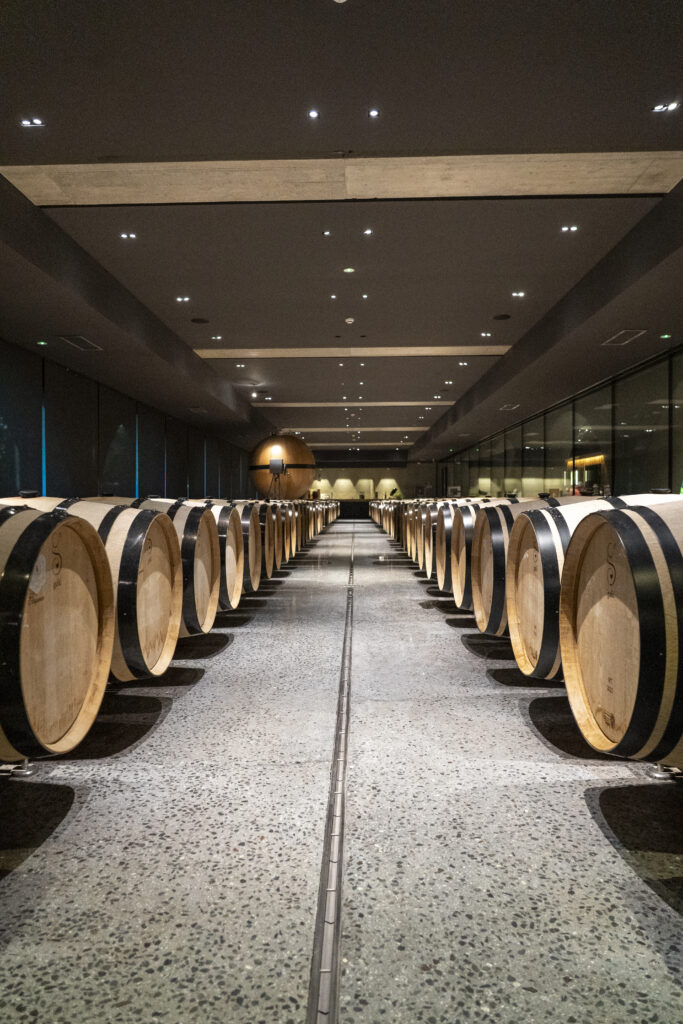
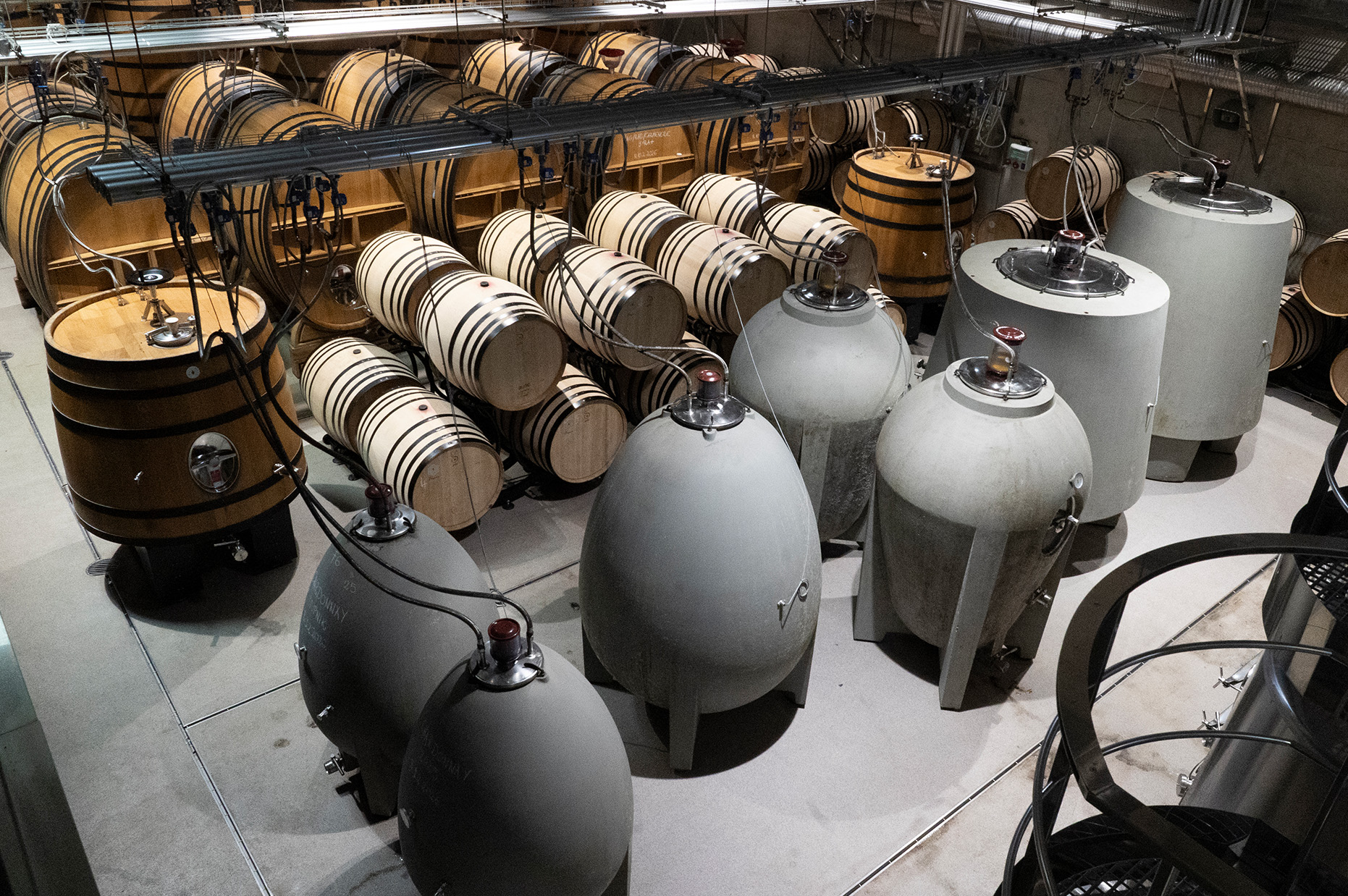
We stopped at Galić Winery for a tour and four-course lunch paired with glass after glass of crisp, mineral-driven Graševina. Josip Galić has built one of the most celebrated modern wineries in Croatia here, and the wines make a strong case for this corner of the country. A perfect send-off from Serbia and a proper welcome to Croatia. Dinner that evening was at Vinola in Zagreb.
Walking the Streets of Zagreb
Day six belonged to Zagreb. The city rewards those who slow down and walk, and our morning tour did exactly that.
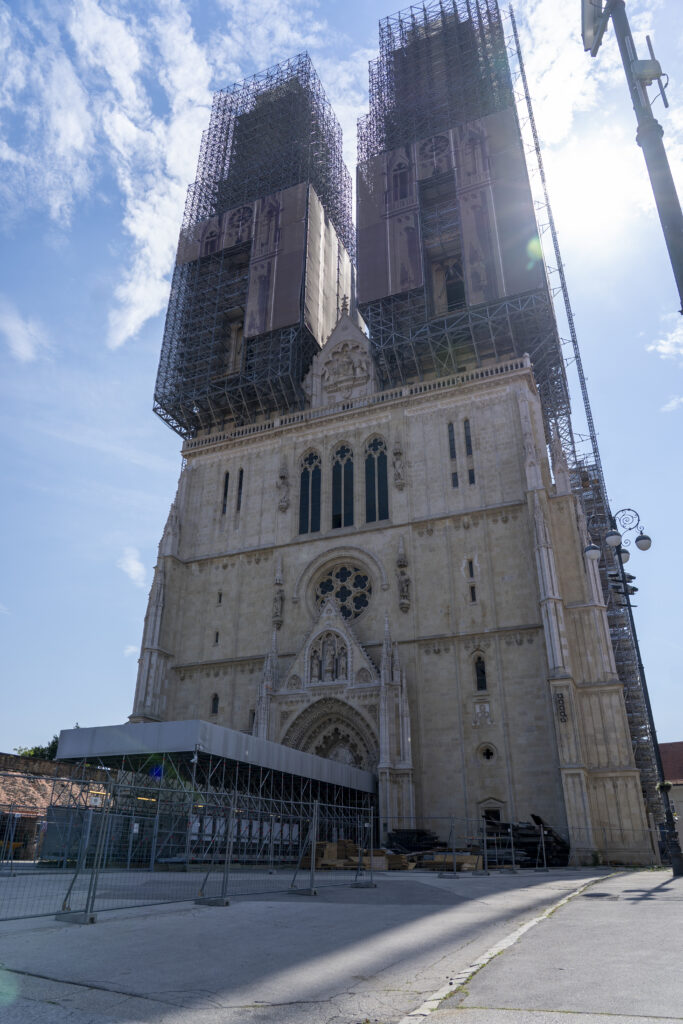
We started at the Cathedral, its neo-Gothic twin spires visible from nearly every corner of the city. The striking form it holds today came from a major reconstruction after the 1880 earthquake. A second earthquake in March 2020 caused serious damage, and as of our visit the restoration is still ongoing with no confirmed completion date. The scaffolding is hard to miss, but the building beneath it is still extraordinary.
From there we wandered through the open-air market, crossed the Bloody Bridge (named for the merchant-era skirmishes between rival neighborhoods on either side), and passed through the Stone Gate, the only surviving medieval gateway into the old city, still an active shrine where locals stop to light candles.
A Special Dinner Reunion
That evening brought one of the unexpected highlights of the trip. Lovro Miklaužić, a former Opolo intern who joined us through a University of Zagreb exchange program back in 2011, came to dinner at a restaurant just across from the cathedral. He talked with the group about his time in California, what it taught him about wine and hospitality, and how it continues to shape his work at his family’s winery back home. It was one of those dinners that reminds you why Rick started this tour in the first place.
Into Slovenia: The Dragon City
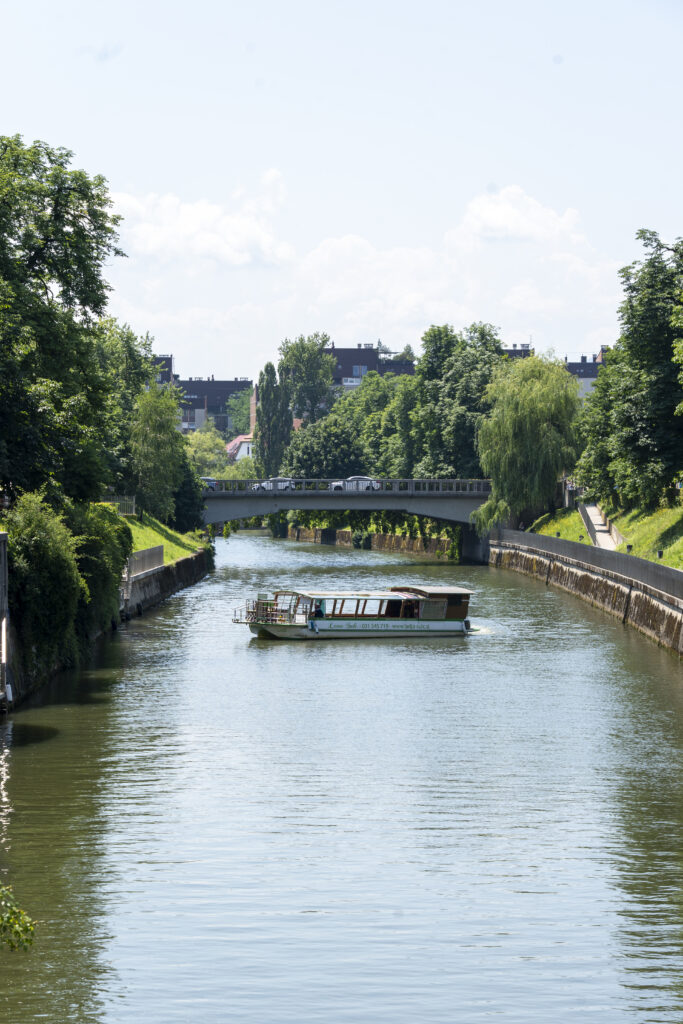
Day seven took us northwest across the border to Ljubljana, the capital of Slovenia and one of Europe’s most charming small cities. After a devastating earthquake in 1895, the city was rebuilt in the Art Nouveau style, and the result is one of the most beautiful city centers on the continent. Much of its modern identity was shaped by architect Jože Plečnik, a Ljubljana native whose imprint on the city has been compared to what Gaudí did for Barcelona.
Ljubljana won the European Green Capital Award in 2016 and it shows. Cars are banned from the center, electric carts ferry people through the pedestrian zones, and the whole place feels remarkably livable. We crossed the Dragon Bridge, climbed up to the fortress for views of the city below, and stopped at St. Nicholas Cathedral where a small worn nose on the bronze door has been rubbed shiny by thousands of visitors hoping for good luck. Naturally, we all took a turn.
Dinner at Debeluh
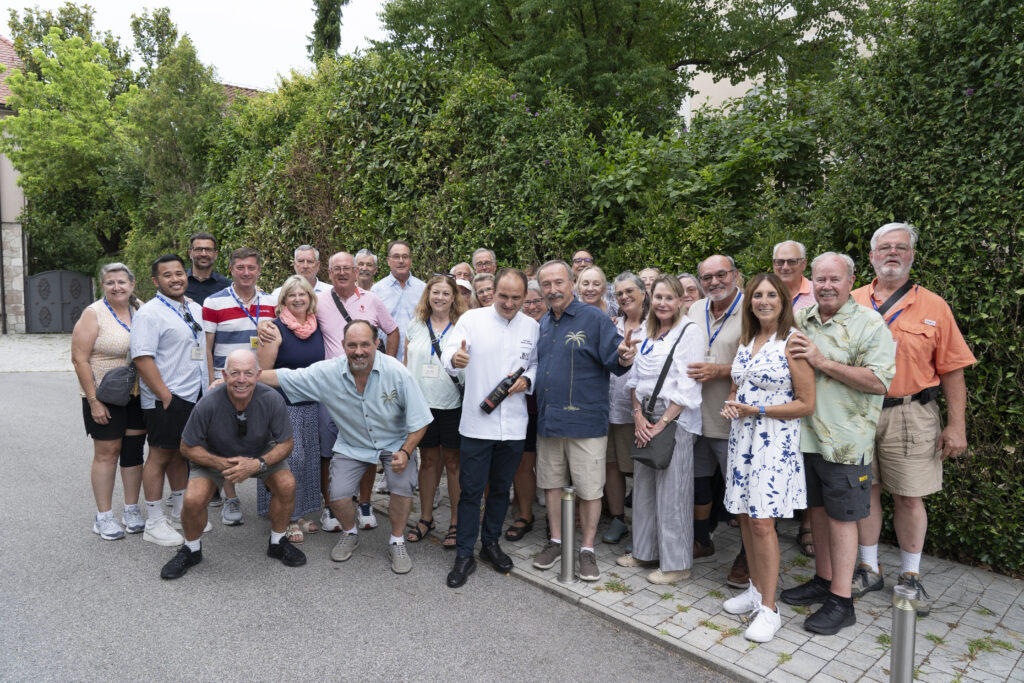
The day closed with a wine-paired dinner at Debeluh, a Michelin-recommended restaurant under Chef Jure Tomič. Slovenia has quietly become one of the most exciting wine regions in Europe, and Rebula, the local white grape, made several appearances throughout the evening. It’s an elegant, complex wine that deserves far more attention than it gets, and after a dinner like that, more than a few of our travelers left determined to seek it out back home.
Seven days in. Eight more to go. The Adriatic is calling.